Search the Community
Showing results for tags 'carnivore'.
-
 (Extinctions True Ruler) Introducing Gorgonops, the Feral Tracker & Slayer of Corrupted Tags: PvP, PvE, scrapped creature, carnivore, ignores armor, creature tracker, mount, blueprint finder, taming assistance, ideas prompts for community, last chance for getting it Concept art by RiskyBiscuits (Sorry if the corruption seems out of place, it was added later. Of course wouldn't look out of place ingame.) PLEASE READ: To the people frustrated with Gorgonops, we hear you. This is the third time we have posted Gorgonops, as it is designed for a desert map (Scorched Earth, Ragnarok, Extinction). Prior to this, other Gorgonops designs have also been posted, which may add to your frustration. We have taken as many suggestions and opinions into account as possible, but will permanently retire this concept after the Extinction vote. I ask of you, survivors, to please give Gorgonops your honest ranking and not rank it according to your frustration, if it does make it to the second round. Whether that puts it in 10th or 1st place, or any place in between, is of course up to you. A lot of work has gone into this concept, and we would hate to see that go to waste this way, but of course every journey comes to its end. We hope this is not too much to ask. To the people who are frustrated with Gorgonops, thank you for your consideration. And to the others, thank you so much for your continued support, its truly amazing to see how many of you are here for Gorgon. - Team Gorgonops Greetings, survivors! I shall introduce to you all the stalker of scent; the Gorgonops! Gorgonops is one of the few creatures cut from ARK that many people knew (thanks to series such as Walking with Monsters and Primeval) and always wished to get since the first days of the game. Even WC planned to bring it into the game, before discharging it. For such a reason the Extinction DLC, the conclusion of the original storyline of ARK, is the perfect occasion for getting this fearsome synapsid finally into the game. Not only that, but the unique design and abilities proposed here surely make the creature blend into the Wasteland Earth environment and set it apart from anything else the game currently has. I kindly invite you all to read carefully through the whole submission before deciding whether to upvote it or not. You’re going to like it!! Latest Updates: [Under Dossier] - New Lore Section - [Under Utilities & Scenarios] - Why Gorgonops is your best asset on the Extinction map - Lore: The pressure from the Extinction wasteland, pushed the Element exposure on Gorgonopses to manifest itself on the creatures' snout. The olfactory organ as well as the deadly fangs got mutated by the Element, granting them unique properties. Gorgonops can now smell and detect the Corruption Nodes, the main sources of the Fallen Earth's greatest menace. But it can also get stimulated by a strange reaction with Element-containing dusts, leading the creature to a drugged-like status of deadly ferocity. Meanwhile the fangs now seem to secrete a strange molecule capable of annihilating the Corruption, like if the Element was trying to heal from its own disease. However, adaptation occurs on both sides as, indeed, the hive mind of the Corruption learned to avoid Gorgonopses, to order its hordes of corrupted monsters to flee from these hounds instead of attacking them. For this reason, a pack of Gorgonopses big enough can scare away even the largest of the corrupted monsters (with exception of the Titans). Wild: Gorgonops specimens most often patrol the wasteland, keeping a nose out for potential prey. Their incredible sense of smell allows them to detect creatures in a wide range around them. Not being very fast, they tend to go after relatively slower prey, which includes survivors. They’re patient hunters, and will track down their targets until the opportunity for a kill presents itself. On rare occasions you may find Gorgonops specimens in safer zones such as the biodomes, sanctuary, and sunken forest, wandering near exclusively in mated pairs as they guard something really valuable. Parental Buff (Wild Only): In the presence of their own pups, wild Gorgonops receive a buff that increases damage output and damage resistance. Pups raised by survivors don’t develop this behavior. Congratulations! You got your Gorgonops! What can you do with it? NEW ABILITY: Hunter of Corrupted The fangs of a Gorgonops melt corruption and thus Gorgonops deals increased damage to all corrupted creatures, and passively deters corrupted creatures with its presence. Some very large corrupted creatures require multiple Gorgonops to be present for this to take effect. This means that you can use Gorgonops to guard your base against corrupted creatures, or use it to wander the wasteland without fighting. POSSIBLE ADDITION: Gorgonops Den Structure In Gorgonops inventory, survivors can also craft a den like those found in the wild. This structure can house anything up to the size of an adult Gorgonops. This den can be used to protect small creatures and babies, and they will grow at a slightly faster rate (Gigantoraptor should be able to nanny them in here too). The den also protects against extreme temperatures and effects while in the wasteland, desert, snowy tundras and other extreme environments, similar to a tent. Another addition COULD be short-range tunnels between different dens that have already been set up. These will function as primitive versions of a tek teleporter, however it should be noted that the range is quite short. Utilities & Scenarios: Why Gorgonops is your best asset on the Extinction map: Gorgonops’ tracking abilities will help you find high level creatures, which are extremely rare on Extinction. Most experienced players will know the struggle of trying to find a high level Giga on Extinction, and Gorgonops will lighten this often painful search. In addition, Gorgonops’ taming assistance tools will bring extra QOL to the taming process. But what really makes Extinction a unique challenge is the corruption-infested wasteland, and Gorgonops absolutely doesn't lack features to give you an edge in such an environment. First of all, its tracking abilities are very helpful in the wasteland, for it helps you track down Element Nodes, which hard to find and harvest before they despawn. As for corrupted beasts - the greatest danger out there - Gorgonops' features deal extra damage to them, melting through their sick flesh. This type of damage is so unique and dangerous that the Element's hive mind learnt to avoid it. As a result, corrupted beasts are scared of a Gorgonops' mere presence. With enough of these wasteland synapsid hounds escorting you, you’ll be able to scare away even corrupted Gigas. What’s more, the Element Frenzy Gorgonops may go into by fighting Element-based/corrupted creatures enhances its strength in battle. All these combat-focused assets make Gorgonops an excellent choice for attempting to defend Orbital Supply Drops. Gorgonops packs even have a chance to scare OSD assailants temporarily, giving the people attempting to defend them slightly more breathing room, as the creatures will come attack it at a slightly lowered pace. PvE: Gorgonops provide lots of use when it comes to taming creatures. Their scent being able to identify the levels and stats of creatures makes finding worthy tames far easier. Bringing unconscious creatures to safety as they tame is also incredibly helpful. If you need to return to a particular creature later since you don’t have the resources, you can leave the creature marked and come back once you’re ready. Digging up valuable treasure is certainly valuable in itself and tracking rare temporary resources such as Element Nodes will surely be appreciated. Gorgonops may see use in swamps and other areas with lots of venomous insects and beasts. They are also great at defending bases against corrupted, as they passively scare off corrupted, including the largest of corrupted, if the pack is large enough. PvP: Gorgonops make for great base defenders. Their autoalert defining specific species is paired well with Parasaurs who identify particular groups of enemies, now at an increased range. In the midst of a fight, their fangs come into good use when ignoring armor of all kinds, allowing them to deal high damage to beefy targets. If a target is sent on the run, the Gorgonops can pick up on their scent and hunt them down until they’re caught. Sniffing out traps can ease raiding by helping raid parties avoid disaster. Finally the Element Frenzy may be an interesting wildcard to play on the battlefield.
- 110 replies
-
- 4
-

-
- creature tracker
- gorgons last stand
- (and 8 more)
-
Authors Amanit and MUSH1 Hello survivors, I present to you the Rajasaurus. It seems to me that the game currently lacks dinosaurs that could give buffs to allies. Rajasaurus would become a faithful assistant for any player, as he is able to increase the maximum weight of allies in a certain radius from him as a percentage. Also, the Rajasaurus itself has a high maximum carry weight. In addition to passive abilities, he is distinguished by a debilitating bite and a special roar, but first things first. Basic information: Common Name: Rajasaurus Species: Rajasaurus narmadensis Time: Late Cretaceous Diet: Сarnivor Temperament: Aggressive Wild This large theropod can be easily identified by its powerful hind limbs and a single horn on its forehead. Rajasaurs tend to migrate frequently, covering great distances. For representatives of their kind, they are very calm, but if you lose your vigilance, you can easily say goodbye to life. His bites quickly exhaust the victim to such an extent that by the end of the fight she cannot even stand up. If the Rajasaurus is severely wounded, it lets out a loud scream and quickly runs away. Domesticated Rajasaurus is highly valued among nomadic tribes. His resilience in travel lends strength to surrounding allies, and they can carry heavy loads more easily. If the caravan is attacked by predators or bandits, the Rajasaurus emits its trademark roar, which helps allies to flee or defend themselves. Saddle: The Rajasaurus saddle has no special properties. Drops: Hide Raw meat Raw prime meat Passive Abilities: • Rajasaurus has a high maximum carry weight, and this indicator improves better than others. • Rajasaurus has an aura that increases the maximum carry weight of allies. The percentage by which the maximum carry weight increases and the radius of the ability can be improved in the characteristics of the dinosaur (they are improved separately from each other). The higher the level of a wild Rajasaurus, the higher these characteristics. However, it will be quite difficult to improve these characteristics, so do not flatter yourself. The weight increase effect will continue to work after exiting the Rajasaurus aura, but only for 15 seconds. Active abilities: •- Bite strike that reduces the target's maximum carry weight . Each bite on the target reduces the maximum carry weight by 5% for 10 seconds. The effect is such that the maximum carry weight cannot be reduced by more than 80%. If the target is a wild creature, then its speed is correspondingly reduced by 5% per bite for 10 seconds, up to 80%. Bite damage base 45 HP. With a bite, the Rajasaurus dismantles corpses, receiving such resources as: Hide Raw meat Raw prime meat Keratin Chitin Raw fish Raw prime fish Organic polymer Pelt • - the roar that increases the speed and reduces the consumption of endurance of allies who are close to the rajasaurus, and the rajasaurus itself . The effectiveness of the buff depends on the state of health of the rajasaurus: 100% - 80% HP - +5% speed and +5% reduction in stamina consumption; 80% - 60% HP - +15% speed and +15% reduction in stamina consumption; 60% - 40% HP - 20% speed and 20% reduction in stamina consumption; 40% - 20% HP - 25% speed and 25% reduction in stamina consumption; 20% - 1% HP - 30% speed and 30% reduction in stamina consumption. The roar effect lasts 45 seconds, and the roar itself has a 30 second cooldown. [C] - menacing roar. It has no function other than aesthetic. •[Left-Ctrl] - Rajasaurus uses its strong legs to extract resources in small quantities, namely: Fiber Thatch Wood Taming: The taming of the Rajasaurus is standard, forced (Your suggestions are welcome). However, once the stun hits 70%, it will let out its signature roar and its speed will increase by 30%, so to stun it, you have to be on a fast creature or trap it beforehand. Rajasaurus stun decays faster than others. Favorite food: Extraordinary kibble Raw lamb Breeding: Breeding in Rajasaurus is standard, but the maturation of a young individual differs from other creatures. Young Rajasaurs are very moody and require attention more often than other creatures (once every 4 hours). For one fulfilled desire, affection is filled by 20%. However, every time the time for a new desire comes, the little Rajasaurus will start screaming loudly, and it will continue to do so even after the attachment reaches 100%. If you ignore the desires of the Rajasaurus, then after a while his affection will begin to sink, so do not make his majesty wait long. Approximate base specs: Health: 700 Stamina: 450 Oxygen: 150 Food: 2600 Weight: 800 Additional Information: Rajasaurus can carry: Wyvern Quetzalcoatl Tusoteuthis Affected: Large Bear Trap Can damage: Thatch Wooden Possible uses for Rajasaurus: Buffer, which will become a faithful assistant in the extraction of any resources, as you can carry much more at a time. • Improvement for the base. Putting the Rajasaurus in the center of the base will make it easier for the tribe members and their creatures to move around. • Fighting pet. Its unique abilities will help its masters in combat, as the Rajasaurus will force opponents to stand like pillars, and its accelerating roar will help allies escape in case of danger or catch up with a fast target. • Resource collector. Rajasaurus has a large weight and is able to extract straw, wood and fiber, therefore it can act as a resource collector. • Good vehicle. While on the Rajasaurus, you can escape most creatures by slowing them with a debilitating bite and using a roar. However, the Rajasaurus itself is a fairly fast creature. It seems to me that the use of most creatures in the ARK is limited only by the fantasy of the survivors, so you can always experiment). Thank you all for your attention! You can learn about the real Rajasaurus here: https://ru.wikipedia.org/wiki/Rajasaurus
-
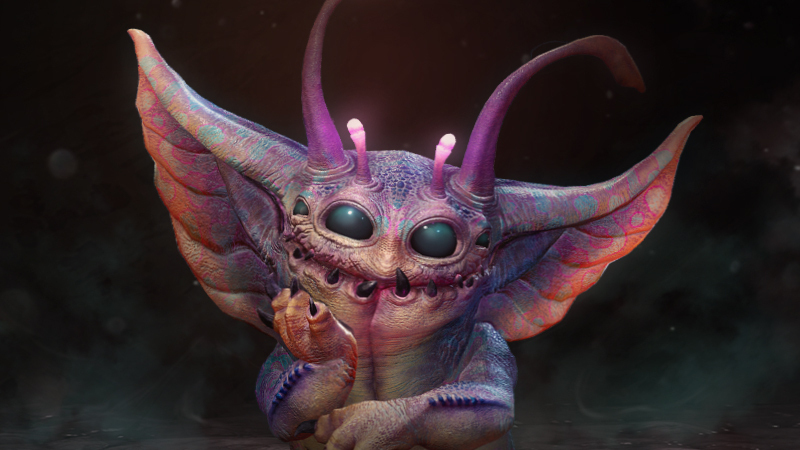 Wild: Wandering the most climate extreme environments in this broke earth, Sinotyrannus Radium has been able to harvest electricity from the environment thanks to its element mutations and use it offensively This Sinotyrannus' crest is usually used as the main outlet of electricity in his body, its able to use its electricity to either shoot out a lightning bolt which crosses among multiple enemies or a flash of blinding light made to stun them Taming Method: You must wait till it shoots its flashbang or lightning bolt, and either deflect it with either a metal shield (flashbang) or with the riot shield (lighting bolt), then it will be stunned, then you may feed it to gain taming effectiveness Tamed: Tribes upon the wasteland have been able to tame these predators by using their own attacks against them, stunning them by reflecting their respective attack and feeding them afterwards Some of these Sinotyrannus are fitted with generator saddles and used as mobile electric sources which dont need gas, this generators are also able to overcharge the Sinotyrannus and make them specially fast and agile compared to most creatures Sinotyrannus; Abilities: Regular bite: Fast bite with decent damage, comparable to carno Lighting bolt: When you enter turret mode you can choose on of two modes, the first mode gives you a lighting bolt shot, which has goes through multiple enemies dealing damage to all of em, a hard hitting attack which takes a couple seconds to recharge, the crest will be a bright yellow when doing this Flashbang: The second mode inside of turret mode is the flashbang, this attack stuns creatures and blind for a few seconds, this attack has a big cooldown and is easy to predict due to its animation, this is to prevent getting stunned all the time, whenever this mode is active the crest will be a bright blue Stomp: A stomp attack which deals moderate damage but leaves an electric field on the ground, this electric field deactivates Meks and other robotic creatures, also it does a continuous stream of damage when inside Passive Abilities: Generator Saddle: Its saddle acts as a mobile generator, this generator doesnt need gas but has a much smaller range Overcharge: When it has a powered generator saddle it unlocks the overcharge meter, this can be filled by attacking and running, when this is activated he is able to do 180 spins on the spot, mega jumps which explode with electricity when it lands and faster movement speed
 -
Taming method Passive It will burrow underground and you drop blood bags. One special ability is that it can latch onto any dino and for that period of time it does gashing damage. It has a healing ability where it goes in a ball and becomes immune to everything but only for a certain amount of time. And it has a knockback attack with its tail
-
The taming method it will pick you up and eat its taming food which are blood bags, Spoiled meat, Giga heart. giga hearts give most taming it wont have a lot of taming effectivenes so give it a couple dinos to eat. blood is second best spoiled meat is the worst for it. one of its special abilities is that it can go invisible at any time of day. special abilitie is it can wrap its wings around dinos the size of a parasaur or smaller which allows them to heal and do bleed damage dropping the enemies health to 15% and cause a gashing wound. You unlock its saddle at lvl 68. and when it harvests a dead body it gets spoiled meat and regular meat
-
Sardinian dhole - the wastelands scavenger
ApocalypseGal posted a suggestion in Creature submission archive
Name: Sardinian dhole Species: Cynotherium sardous Time: Late Pleistocene Diet: Carnivore The Sardinian dhole is an extinct insular canid. It went extinct at the end of the Pleistocene. It is a medium-sized species of canid that originally lived in the Mediterranean islands of Sardinia (Italy) and Corsica (France) during the Pleistocene. They are solitary animals and prey on smaller fast creatures. Since the dhole’s diet is limited to smaller prey, they specialized in hunting small fast-moving creatures. You can spot these canids hunting and scavenging alone or with small groups of the same species in the wastelands hunting for weak, injured or small creatures. They are super curious about survivors have been seen curiously going up to them however they seem to avoid them when there are a lot of other creatures around. Some say that if you feed it once it goes up to you that they will allow you to pet them overtime you will be able to form a bond with them allowing you to tame them. Abilities. Sardinian dhole doesn’t just make great companions as a survivor’s best friend, but they are great at tracking. Tracking. - able to detect weak/injured creatures, or even dangerous threats. - able to detect and locate your own creatures, can help you track down any of your missing creatures. Scavenging. - the ability to dig I have heard from other tribes that some may even find some interesting loot. - they could even be able to find and pick up dropped/lost bags dropped from survivors. Guard dog -able to detect and alert (barking, growling) survivors of any wild/tamed creatures or other survivors that may pose a threat. links: https://sciifii.fandom.com/wiki/Sardinian_dhole https://en.wikipedia.org/wiki/Sardinian_dhole -
(I promise that now is the last time you will see this boy from me.) "let's do this one last time" Guanlong Wucaii is a species of dinosaur that lived at the end of the Jurassic period, approximately 156 million years ago, in Asia. Its name means "Crown Dragon" due to the crest on its head, This was one of the first species of Tyrannosaurus, unlike this one, it had three fingers on its front legs instead of the two already known from the rex. From its hind legs you can see that it was a fairly fast and agile predator. Before we talk about its abilities, I'd like to highlight a couple of basic things I'd like this creature to have: -Its base Health is similar to that of a Thyla -Low weight: it is a light and fast animal, it cannot carry so much weight. -His skills use a lot of energy -It has a moderate base attack, but makes up for it with a 5 second duration bleed, which doesn't stack, but does reset after each attack. -is one of the fastest creatures on the Ark WILD: The creature will appear in the wild in groups of 3, which, like Raptor or Deinonychus, will have an alpha which will be the highest level Guanlong. When Guanlong detects a player, two things can happen, first: If guanlong is not in the player's field of vision, it will imitate a random roar of the strongest creatures on the island such as Rex, Carcha or Giga, in the case of being in the player's field of vision, Guanlong will begin to attack the player directly. Domestication: To tame a Guanlong, you must avoid being detected by it, be it with a camouflage suit or a hot soup, then you must separate it from its group, either killing them or distracting them, having him far enough away from his group, you must feed him rotten meat, which will raise his unconsciousness until he sleeps, after that just feed it meat until it is tamed. Tamed: He has a pack roar, when using it he receives 15% speed and 25% attack, it lasts about 100 seconds, but has a 30 second cooldown. Guanlong can emit high and low frequency sounds, it can even imitate animal sounds, the latter can be used to intimidate or annoy survivors with terrifying roars, or to specifically attract large creatures, such as Carcharodontosaurus or Yutyrannus, which will target Guanlong and start chasing him, which is perfect for putting creatures into traps or making it possible for another player to shoot at it from another side. High and low frequency sounds can make a big difference in PVP or PVE, as they will stun large and small creatures for a short amount of time, depending on the animal that you want to stun, you must raise or lower the sound frequency, the bigger the animal, the less stun time it will have, for example, a Giga would be stunned for 2.5 to 3 seconds, a Titanosaur might be stunned for 2 seconds, a Raptor for 9 seconds and a Dodo for 15 seconds (although I don't know why you would attack a Dodo), obviously this ability will have a cooldown of 20-30 seconds. Guanlong can also buff his allies using his ability, giving them 30% more stamina for 12 seconds. but then you may wonder: What happens if we put many guanlongs in a row? During the cooling time a player could get off one, and get on another... but the solution I came up with is the following: if there are more than 3 Guanlongs in an area (I didn't think of a specific radius), and one uses its sound ability, the rest of the Guanlongs will be stunned for twice as long as the stunned enemy creature, if there are only 3 guanlongs in the area, and one is on cooldown, when you get on another and use its ability, it will stun the enemy for 25% less time, in addition to depleting three times the stamina of the Guanlong used. Here a dossier that I had done a long time ago sorry for my bad english...again (and again)
-
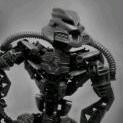 Common name: Anteosaurus Species: Anteosaurus Magnitoxis Time period: Permian Temperament: Aggressive Diet: Carnivore DOSSIER HERE: Couldn't get the file small enough while still legible, sorry! Wild Already the largest predators of the Permian period, these massive synapsids appear to have further grown to match the mighty Tyrannosaurus in size. Anteosaurus at first seemed uniquely immune to the corrupting influence of Element, and they indiscriminately go after both normal and corrupted prey. Upon further observation, though, I have found that they have developed a unique albeit disgusting way of avoiding the worst of the corruption: they regurgitate the nastiest parts of their meals as a form of both defense and offense. The ejected viscera emits a (thankfully odorless) purple mist that weakens most creatures caught in it. Inversely the Anteosaurus themselves become invigorated when in contact with the clouds of gas. Domesticated Figuring out how to tame these beasts has proven to be quite a challenge. I would wager that the most successful way for a tribe to earn one’s trust would be to exploit their ravenous nature by purposefully feeding it their own healthy creatures after they have been exposed to the Anteosaurus’ corrupting clouds. I imagine that in this case, the bigger, the better. A tamed Anteosaurus is a slow but powerful beast of war, designed to stack the deck in their own favor as much as possible. Opposition designed to siege and outlast may find themselves on the back foot once weakened by toxic fumes and facing a massive predator that is itself built to win drawn-out brawls. Already naturally bulky, Anteosaurus can momentarily brace themselves to survive almost any single hit, though repeated blows will break through their defenses and cause them to take more damage than normal. One interesting property of Anteosaurus’ unique diet is that, rarely, they can generate a unique substance I’ll term “Anteogris”. This resource can be used to, for a lack of a better term, “mutate” poor quality tools into higher grade items, though even the most skilled of smiths frequently fail to do so successfully. ~~~~~~~~~~~~~~~~~~~~~~~~~~~~~~ Wild Behaviour and Taming: Wild Wild Anteosaurus are found all across the Wasteland, though never in large numbers. As apex predators they attack almost everything they come across, with a preference for large and corrupted creatures. They’ll make short work of the latter, as both wild and tamed Anteosaurus hit the corrupted twice as hard. Normally, they will have an extra low aggro rage in regards to unmounted survivors as they prefer more filling meals. Wild Anteosaurus will only make use of the short ranged spit attack, and will not refill the resultant meat piles. They will activate their brace ability, but only below 50% health and after taking a significant amount of damage in a single hit. Taming Taming an Anteosaurus requires sacrificing tames to it, similar to the Troodon (though this time linked to something far better able to kill its “kibble”). In order for a tame to be counted towards taming progress, it must be badly poisoned from exposure to the toxic fumes emanating from Anteosaurus spit piles. Tames with high drag weights give more taming progress, following a similar formula as Rhyniognatha stat inheritance. Abilities: Spit and its effects Anteosaurus can spit two different types of projectile, depending on whether right click is tapped or held: The first, activated by tapping right click, is a long ranged spit that travels far and deteriorates quickly once it has landed. The meatpile generated is counted as a Thatch structure, and has 3,600 health. This pile degrades at a rate of 120 health per second (30 seconds total), and can not be refilled in any way. The poison mist cloud generated by this spit covers a maximum area roughly equivalent to 2x2 foundations. The second, activated by holding right click, is a short ranged spray that generates a much larger and sturdier pile of corrupted meat. This pile is considered a Wooden structure with 10,000 health, draining at 55 health per second (just over 3 minutes from 100% to destruction). This pile can be regenerated by re-holding right click when in the general vicinity of the pile. The cloud generated is much larger, covering a circular ground area with a diameter in excess of a Giga’s length. Each spit costs a certain value of food to use, the short ranged version being significantly more “expensive”. A tame with 50 wild points into food may only be able to use the short ranged spit twice before starting to starve with a third. These mist clouds have several deleterious effects on any non-Anteosaurus that enters it. At first, stamina usage is doubled, and additionally health is slowly drained from anything too short to stand above the cloud (Carnos are tall enough for long range, a Rex for short range). Once allowed to build for several seconds, the toxin worsens. Once this happens, even animals tall enough to escape the clouds start to lose health and are now considered “corrupted”. The “Corruption” from being badly poisoned lasts for 3 minutes, has several effects, and persists regardless of whether or not the inflicted are within a cloud. Badly poisoned foes will go through their stamina twice as quickly, and will take double damage from any Anteosaurus they come across (as well as aggroing wild specimens). On top of this, they will take a DoT effect of 15 damage per second. One potentially beneficial effect, though, is that true Corrupted creatures will have a much harder time detecting and aggroing on a badly-poisoned tame. The Anteosaurus itself is immune to the toxins, as are survivors equipped with gas masks, scuba, hazard, tek gear, or protected by sealed saddles such as the Anteosaurus’ own. When standing inside its own poison clouds, an Anteosaurus is invigorated and constantly regenerates its stamina. It also gains life steal, further enabling it to outlast and outfight anything else caught in a cloud. These effects will persist for a few seconds once it is nor longer in contact with the toxic mists, though only for a fraction of the time the similar Hydrated buff lasts for creatures like Spinos and Shadowmanes. Brace Hitting R toggles your Anteosaurus into a Bracing stance. Once toggled, an Anteosaurus will crouch down and become unable to sprint, but gains a massive defensive perk: for any given second, the Anteosaurus can not take any more than 10% of its maximum health in damage from an outside source. This ability is very useful for tanking massive amounts of damage from any single hit, such as a blow from a Titan or a fully mutated Giga. Likewise, when braced an Anteosaurus is immune to all forms of damage over time. While very powerful, this ability does have a downside…. While bracing is active, the Anteosaurus’ health will constantly drain at a base of 1%of its maximum health per second, the drain stopping once the Anteosaurus has reached 100 health. If the Anteosaurus heals back above 100 health, the drain will continue until it is back to that threshold. What is most important, however, are these next two points: This health drain completely ignores the brace stance’s 10% max damage system (this is not an outside source, after all) The percent of health drained per second increases with every hit the Anteosaurus takes, increasing by 2% with each extra hit, capped at a worrying rate of 25% per second after being hit 12 separate times. Good against a single target certainly, but terrible against swarms or when shot at by a gun with a high rate of fire. This ability can be toggled off after a short 5 second cooldown, and can be activated/deactivated remotely for any nearby, unmounted allied Anteosaurus by using the default “Wave” emote. Anteogris Anteogris is a rare substance that Anteosaurus generate slowly in small quantities over time, similar to a snail’s low cementing paste yield. More useful than the snail, however, are the special properties of Anteogris. When combined with raw materials and various qualities of element, Anteogris can be used to upgrade any full durability tool/weapon/saddle to the next tier of quality. In terms of cost, Primitive and Ramshackle-tier items require half of their base crafting materials and element dust to upgrade. Apprentice and Journeyman items need element shards and 75% of the item’s cost. For Mastercraft, a complete piece of element is required instead of shards. Ascendant and Tek-tier items can not be upgraded at all. The upgrade process is also likely to fail, only succeeding a third of the time at base; otherwise, it has a 50/50 chance of either doing nothing at all or significantly damaging the item in question. The chance of success increases by 1% with each level in the crafting skill, requiring 66 levels minimum to guarantee a successful upgrade. The exact quality of the new item is also determined by the crafting skill. With no investment, any upgrade is nearly guaranteed to have the lowest possible stats for an item of its tier. As you level crafting, the relative quality of the new tool becomes higher and higher. Condensed stats and misc Essentially a land Plesio hampered by only slightly better than Giga stamina when outside a meat cloud. Nurgle boy. Size: About equivalent to the rex, squatter but overall longer Health: 2200 with decent gain per level Speed: Normal walk is around rex speed, sprint is faster than a rex but…. Stamina: God awful outside a cloud, nearly Giga-esque. Inside a cloud, it constantly regenerates with no delay after a stamina-consuming action. Primary, LMB attack: Medium attack speed, 75 base damage. 2x damage against corrupted, 2x against badly poisoned foes. That means 4x against badly poisoned corrupted creatures Secondary, RMB attack: Spit, tap for long range hold for short range. Consumes a non-insignificant % of food per spit. Short range piles have large cloud sizes and deteriorate slowly over time. They are considered wooden structures, and can be “repaired” by holding RMB when inside the cloud for a cost in food. Long range piles deteriorate quickly, have smaller cloud size, and are considered thatch structures. Can’t be “repaired”. Tertiary, R key: Toggles brace Extras: Anteosaurus’s saddle acts as a gas mask, shielding its rider from airborne toxins Uniquely gains food by attacking anything, as well as harvesting corpses. This effect is minimal on normal creatures but is boosted against corrupted ones. Also affected by the size of what it attacks/eats. Moves like Ark Additions Deinotherium. Saddle: Level 90
 -
 Tilacino /Tigre da Tasmânia Olá sobreviventes, hoje trago para vocês uma criatura incrível, mas com uma história triste, já que os humanos foram os responsáveis pela sua extinção. Dossiê Tilacino Nome comum: Tilacino Nome científico: Thylacinus cynocephalus Período: Holoceno Grupo: Mamífero Dieta: Carnívora Temperamento: Agressivo dossiê selvagem Nunca pensei que encontraria um Thylacine na arca, pois são animais extremamente raros e só aparecem em noites escuras, mas fico feliz em ver um deles vivo, só que são bem diferentes do que eu lembrava. Maiores que seu primo o Thylacoleo , e vivendo em grupos de 5 a 6 indivíduos liderados por um casal alfa, são animais noturnos e gostam de caçar ovelhas na calada da noite e atacar as bases sem serem notados. O Thylacine é um dos predadores mais ferozes que podem ser encontrados no ARK. Com sua aparência de lobo, ele é capaz de caçar presas maiores que ele. Possui uma mordida poderosa e garras afiadas, o que o torna um inimigo mortal. Thylacinus tem um corpo alongado com pernas relativamente curtas. Sua pelagem é predominantemente vermelha, com listras escuras em todo o corpo, semelhante a um tigre. Ele tem uma cabeça estreita com orelhas pontudas e uma mandíbula poderosa. Domesticação Para você domar um Thylacine você vai precisar de carneiro e um cocho, o Thylacine gosta de começar a caçar por volta das 23h então coloque o cocho e depois a carne de carneiro e espere a matilha se aproximar, comprove-se de tenha carne suficiente para todos, depois você vai se aproximar sem nada, sem armadura, armas ou comida etc. quando você chegar perto o suficiente do alfa você ira se curvar mostrando que é superior a você e então ele se curvará de volta mostrando que confia em você, depois disso toda a matilha ira seguir você e se juntar à sua tribo. Tilacino domesticado Além dessa habilidade, ele possui outra como escalar e um pulo como o Thylacoleo , fora que eles podem se predar em criaturas maiores do que eles como os Titãs, além de ter uma corrida muito rápida que não consome quase nada de sua resistência, são usados como montarias para viagens longas, além de ele ser um grande nadador como seu nadador cachorrinho, o que o torna uma criatura que cada tribo que tem pelo menos 2 exemplares deles. Os Thylacine possuem 3 tipos de selas, a primeira não é exatamente uma sela, mas sim um colete que aumenta sua defesa, mas o jogador fica impossível de montar no Thylacine. Já a segunda é voltada para um combate uma sela que permite montar, além de ter placas de metal que reduzem o dano de inimigos. Já a terceira permite que o jogador transporte itens, recursos e animais inconscientes de médio e pequeno porte e um espaço para uma pele que permite equipar uma arma de fogo de alta cadência de tiro ou uma pele de papai Noé. Eles são animais multiuso iguais aos que você jogou single player, PvP ou PvE , eles sempre serão úteis para o sobrevivente. Os Thylacine são animais únicos porque possuem uma habilidade especial chamada de conjunto de buffs que podem ser ativados na hora e que por necessidade, esses são os buffs: Chamada de dano: Todos os tilacinos com buff terão dano aumentado. Chamada de Velocidade: Todos os Thylacinos buffados ganham maior velocidade de movimento e ataque. Tank Call: Todos os tilacinos com buff recebem menos dano dos inimigos. Chamado de cura: O tilacino alfa pode curar todo o seu rebanho, mas para realizar essa cura ele precisa de carneiro em seu inventário. Slow Call: Quando Alpha Thylacine usa este rugido, todos os oponentes recebem um debuff que os retarda. Chamado de confusão: Quando Alpha Thylacine usa esse rugido, todos os animais não obedecem aos associados. Ecoar corações cardíacos: você pode descobrir um animal específico através de seus corações cardíacos, além de mostrar a distância e localização. Quando você estiver montado em seu Alpha Thylacine e pressionar a tecla Q ou equivalente nos consoles, aparecerá uma roda onde você poderá escolher o buff que está usando naquele momento, mas use-o com cuidado pois você só pode ativar no máximo 3 buffs e você terá que esperar 15 minutos para usá-lo novamente. Os buffs duram 1:30 segundos e o preço disso é a resistência do Thylacine que é drenada rapidamente. Além disso, só o alfa do bando vai ter permitido usar essa habilidade. Aqui abaixo possui algumas imagens que para serem utilizadas caso o Thylacine vença. Seria uma ótima adição ao jogo, se tiver mais dica de habilidade deixe nos comentários.
 -
Protosolpuga: The murderous speed-demon of the desert
Plasma6767 posted a suggestion in Creature submission archive
The protosolpuga is an ancient relative of todays camel spider. The main idea for this creature was that it'd be a very speedy and dangerous foe to make exploration a bit more challenging. It would be a bit faster than a raptor or sabertooth and would be able to outrun most creatures. I tried making it both a good fighter and a good travel mount hence the 2 modes. Even thought this is supposed to be the protosolpuga I actually just designed it after the currently alive camel spider, with a few minor tweaks and changes ofcourse. This is simply because the few images that pop up on google when searching protosolpuga are, as seen at the bottom of this page, very vague and hard to understand. Behavior: The protosolpuga would be a very aggressive creature, charging at anyone who gets too close. It'd run up to any creature it comes upon in its movement mode to then switch to combat mode and attack. If the creature were to be small enough, carryable by an argy, the protosolpuga would use its grab ability in which it uses its jaws to pick it up into a defenseless state to then chomp down on it, dealing bleed and massive damage. If multiple creatures were to attack it it'd pick one up if possible and chomp on it in its jaws whilst using its claw strike to hit the rest. If the creature were to be too big to be picked up the protosolpuga would simply use its claw strike and chomp normally. Abilities: (Left Click) Chomp: A very strong attack in which the protosolpuga would clamp down its jaws on its unfortunate foe. It would deal massive damage and bleed but would have a quite long cooldown so it could only be preformed every other second or so. This would mean that the chomp attack actually would have slightly worse DPS than the claw strike but its bleed would make it stronger against foes with more health. The chomp attack would be weakened when in movement mode and would deal less bleed however it'd be the only attack available in movement mode as the 2 front limbs are busy running instead of fighting. If the protosolpuga were holding a creature in its jaws with the grab move the creature currently being held would be the one to get damaged by the chomp attack. (Right Click) Claw Strike: A slightly weaker but much faster attack that utilises the protosolpugas 2 raised front limbs in combat mode to swipe, one after the other, in a 2 hit attack towards its foe. However, since it utilises its 2 front limbs the protosolpuga would only be able to use this attack when in combat mode. The claw strike attack would hit the target twice and have a much lower cooldown than the chomp which would lead to it actually having slightly better DPS. However this attack wouldn't make the opponent bleed so this attack would be reserved more toward weaker foes with less health. However, this attack would only be useable in combat mode as in movement mode the 2 front limbs would be used for movement instead of combat. (C) Grab: Much like an argentavis the protosolpuga would be able to gently use its jaws to pick up and carry around creatures. The creatures that would be carryable in the protoslpugas jaws would be the same as the argy can carry in its talons. If the chomp attack is used whilst a creature is currently held by the protosolpuga the creature being held will be hit. Stats: Healt: Just a little weaker than a rex or spino to compensate for it dealing a bit more damage than them. Stamina: Decent, like an argentavis but would loose stamina faster in movement mode. Oxygen: Don't really think it matters, it's a giant desert dwelling arachnid. Food: Just about like a rex or spino. Wheight: Pretty much like a rex or carno, it's not meant to be used for rescource gathering so it'd just about have enough to carry you, something in its jaws, and som meat/hide & such in its inventory. Damage: About as strong as a rex or spino when in combat mode but only about as strong as a carno or baryonix when in movement mode. However, keep in mind that it'd also have bleed a bleed effect making it slightly superior. Speed: A bit faster than a raptor or sabertooth, not fast enough to truly be considered a travel mount but would atleast be able to catch up to most creatures on the ground. Torpor: Just about the same as a rex or spino as its taming method would make tranquilizing it hard enough as it is. Movement Mode: When in movement mode the front legs of the protosolpuga would be lowered down to the ground and be used for movement instead of combat. Movement mode would simply be activated by running (holding shift whilst walking). Whilst in movement mode you'd have no resistance or damage reduction and your attacks would be weaker but you would be traveling att significantly faster speeds. The chomp attack would now do less bleed and deal less damage overall and the claw strike attack wouldn't be able to be preformed as the front legs are being used for movement. Combat Mode: When in combat mode the front legs of the protosolpuga would be raised up and held in the air to be used in combat to attack and block incoming attacks. This would make the protosolpuga stronger in general but much slower like an anky. When the protosolpuga is ridden combat mode would be activated by simply not sprinting for a second or so but when not riding it it would activate automatically when it detects a threat nearby. When combat mode is active the protosolpuga would deal more damage get a damage reduction from attacks coming from infront of it as it would atleast partially be able to block them with its front limbs. The chomp attack would deal more damage and now induce a stronger bleed effect and the claw strike attack would now be useable. Taming: The protosolpuga would be a knockout tame but due to its thick armor plating it'd be invulnerable to all tranquilizers. To tame the protosolpuga you'd instead need to let it grab on to one of your creatures. When this happens the protosolpuga would be left with ith it's jaws open. This then gives you a chance to be able to run in with a shield and forcefeed it narcotics. After this it'd let out a shreik and begin to chase after you. During this chase you have to lead it to another one of your tames so that it looses aggro and switches target to grab on to the new creature, leaving it vulnurable for another force feeding of narcotics. This process would then continue until it reaches enough torpidity to be tranquilized. After this its just like a usual knockout tame where you simply just put carnivore food into its inventory and wait. Breeding: The protosolpuga would be breed like any other creature but would, as it is a very strong tame, have a quite long breeding interval, hatching time, and maturation time. Biome: When I started working on this creature I originally intended it to wander the wasteland between the biomes as I felt that biome was, at least compared to the others, a bit lackluster. However as I kept working on it I realised it just blatantly fit better in the desert area. Protosolpuga Fossils: Camel Spider: Links: https://en.wikipedia.org/wiki/Protosolpuga https://en.wikipedia.org/wiki/Solifugae -

Quilosaurus - (Brazilian Spino) "Oxalaia Quilombensis"
Clayco1 posted a suggestion in Creature submission archive
Pronunciation: (Kee· low· saw· ruhs) Abilities: - Quilosaurus can swim underwater indefinitely without Oxygen (Functioning much like it's cousin the Baryonyx). Quilo also does not need to be tethered to a whistle in order to keep it from floating to the surface. - Quilosaurus has no Oxygen Stat. - While swimming, Quilo Has a sweeping / swooping grab ability with it's front arms and claws which enable it to "pick" medium sized dinos underwater such as Megalodon, small / medium sized dinos, and humans. - The Sail of the Quilo provides added protection to the two riders, and is also a non vital organ to the Quilo. Additionally, a Quilo's sail takes 85% reduced damage to any incoming damage that specifically hits the sail only. - Due to the capsule shaped bamboo saddle construction, players cannot be dismounted, grabed, or picked from a Quilosaurus by any means. - On dry land, with it's thick, paddle shaped tail, the Quilosaurus can perform a tail spin slap, much like a reaper, dealing damage and knockback to enemies. (C-key) - Quilo have a primary bite attack which deals identical damage to that of a Rex. - On dry land, Quilo have a secondary attack ability to Grab on, while simultaneously letting out a roar, and locking in place Rex sized dinos and smaller, with it's front arms and long claws, allowing Quilo to bite the immobilized prey with it's primary attack at the riders discretion. - While Grabbed onto dinos, underwater, or on land, Quilosaurus can bite their prey while it has them in a grab hold. - In the Unique circumstance that a dino or player is grabbed by a Quilosaurus, and takes a bite only while grabbed, they take a 5% bleed damage to Hp that stacks with multiple bites. - On land, the Grab lock last around 8 seconds, with a 20 second grab cooldown on dinos previously grabbed. - Underwater The Grab operates like a Tuso or Wyvern, where Quilo can swim around with their held prey, and the dino or player can't escape the grab hold until released. - The Secondary rider of the Quilosaurus has the option to pull out weapons, such as bows, rifles, and other melee weapons. - The Secondary rider is positioned in the seat behind the primary rider, and both are protected from all picks and dismounts. - The (C-key) attack underwater, functions as a 180 degree direction change, as momentum for a tailspin can't be accomplished with water resistance. - Quilosaurus can traverse structures with ease, such as metal spikes, ground structure, and even small gate frames at times. - Quilosaurus has identical Hp and Damage stats to that of a Rex. - While the Quilo has raw fish meat in its inventory, it gains a 10% Damage output increase, 5% movement speed increase, and a 10% Reduction to incoming enemy Damage, due to an adrenaline rush. - Due to the spikey nature of the Quilosaurus sail, they have the unique privilege of not being able to be picked by Tuso, or Rhyniognatha. - Quilosaurus can be transported, uncryoed, and used on the Aberration map. - Quilosaurus have a 75% weight reduction to fish meat in their inventory. - The wet skin of the Quilosaurus is slippery and slick, grapples are unable to attach to the slippery skin of the Quilosaurus. Taming: - Quilosaurus are aggressive, but elusive. If found, they must be tranquilized into submission. On occasion, survivors offering minimal quantities of cooked prime fish meat, to a subdued Quilo, have been known to gain the admiration of an aggressive wild Quilosaurus, therein taming and utilizing them for their all terrain abilities and strength. Habitat: - Deep lakes, Shorelines, Oceans, and occasionally large underground caves with access to water to lay eggs and rear their young. Links: https://en.wikipedia.org/wiki/Oxalaia- 2 replies
-
- 3
-

-
-
- underwater-pick-ability
- deep-sea-apex-predator
- (and 1 more)
-
Tyrannotitan - The Uncontrollable Tyrant Of The Cretaceous
brood34 posted a suggestion in Creature submission archive
The introduction of the Tyrannotitan into the Ark PVP scene promises to be a transformative and game-changing experience. This formidable creature is set to become a new cornerstone in the ever-evolving landscape of player versus player battles. Its introduction brings with it a breath of fresh air, injecting a unique strategy and counterplay dynamic that will have a profound impact on the existing meta. Tribes will find themselves at a crossroads, faced with critical decisions that will shape their survival and dominance in this competitive world. Some will be focused on acquiring and securing their own Tyrannotitans, recognizing the immense tactical advantage these creatures provide. Others, however, will take a different approach, opting to invest their efforts in devising means to effectively neutralize enemy-controlled Tyrannotitans, thus establishing a delicate balance of power and strategy that will define the new PVP landscape. In this ever-shifting environment, adaptability, strategy, and coordination will be key to success, as tribes strive to navigate the challenges and opportunities that the Tyrannotitan brings to the world of Ark PVP. -
Simbakubwa (Simba the Loyal) Thank you for looking at my suggest! I am not the best artist but I hope that this drawing will get my point across! Info Even thought it resembles a large cat and its name means “great lion” in Swali it is actually closer to the hyena family. This massive mammal is from the Miocene era. It was discovered by Kenyans in Western Kenya. This animal is estimated to weight in at about 650 pounds and the largest could get to over 1500 pounds. It also has a large head with a very powerful bite. Environment This animal mostly lives in the city, when the corrupted dinosaurs started to appear on the outskirts they were pushed inward. This also lead to them becoming attracted to element, once they started to consume this their bodies began to change. They started to have blue element veins run along their legs and you can some hints of a metallic substance. You will also see that they have a large array of different patterns and colors on there bodies, such as stripes, sports, manes and specks. This biggest change was their intelligence, if you watch them you can see that they are actually thinking about ways to solve problems. Its a fantastic sight to see!. Taming. This animal is PROUD and smart, while they are not prone to attack if approach they will if they are extremely hungry. So It is best to wait till they have already fed in order to approach and try to tame. There is 2 important steps taming this creature, 1 is that when you approach you much make it an offering such as meat or element. If it accepts it, it will allow you on its back and this is were the real test begins. You must prove your worth by not falling off, this can have dire consequences, since they can climb walls! Once tame you will have the most loyal beast ever because this beast will only every allow one person to ride it and access its inventory and that the one who tamed it!. Once you have tamed this animal you will have a very powerful companion. It can jump and climb walls which is great for getting out of a hot spot. It has a powerful bite which can do some major damages, specially to corrupted dinosaurs. Also it proves to be useful to have this companion to the highest level because anything that is helping it fight will get a pack buff, if its the highest level. https://en.wikipedia.org/wiki/Simbakubwa
-
- 1
-

-
- new creature
- extinction
- (and 3 more)
-
The Bahariasaurus would be about the size of a rex, slightly smaller with large spikes along its back, high health and slightly weaker than a rex in attack, taming method would be similar to a Carcha, but the Bahariasaurus would be less aggressive making it easier to tame, it's saddle will have a solid iron cage allowing the player to ride without worries of being sniped off their mounts back.
-
Maip - The las survivor - The purger of corruption
Gaborex posted a suggestion in Creature submission archive
Maip was a large carnivorous theropod, belonging to the Maastrichtian Cretaceous, and for now the largest known megaraptorid -art and description for gaborex Dossier description Wild -Temperament:cautious -Diet:carnivore -Time:cretaceous -Species:maip dynastes -Spawn: the wastland This place does not seem like a viable area for life, but somehow, organisms always find a way to move on, and maip is the perfect definition of this, this creature has shown incredible strength, and above all, intelligence even Most impressive, despite its size, it is incredibly agile and fast, thanks to this, it has achieved success comparable to or greater than most creatures I've ever met! Tamed Taming one of these is probably the hardest task I've ever come across, even harder than dealing with managarms, they are very smart and don't get fooled by any trick, but luckily, the result is worth it. I have noticed that its huge claws have a complex system of vessels and muscles that it can use as if it were a spur, releasing toxins or electricity in a controlled manner, as well as contracting its hands to maim its prey. Introduction Maip is created as a creature focused primarily for combat, both pvp and pve, armed with a skill kit made primarily for combat against groups of enemies, having a great ability to retain and damage multiple targets in a lethal way, as well as can easily withstand and recover from various types of damage without much trouble. Domestication To tame maip, we will have to challenge him to play his own game, to start it you will only have to approach and accept it it will consist of damaging wild creatures for 3 minutes in a game of three rounds, if you manage to win, you will be able to go to the next phase, if You don't succeed, Maip will become aggressive. after winning the 3 rounds, Maip will challenge you to a fight, in which you will have to damage him below 10% of his maximum life, when you achieve this, Maip will fall exhausted and will scream to attract to creatures which will go directly to attack maip, when asleep, maip will quickly lose torpor, so you will have to give him narcotics constantly. to tame it, you will have to feed it meat or kibble extraordinary. (saddle design) Food preference Abilities - Attacks -Basic attack: A quick and deadly claws -right click:a lethal stabbing This attack reduces the mobility of the target, causing a brief bleed, added to this, by dealing damage with attacks and abilities, you can charge your claw to use one of its modes. to change mode you have to hold ctrl + and to use hold ctrl + for special claws 1-Lethal contraction:This mode greatly increases backstab damage and grants 100% armor penetration, completely ignoring the target's defenses, as well as applying 15% bleed, greatly reducing the target's speed and preventing raise the gun flying or using movement moves, as with the other modes, when using this mode you will get a buff for 15 seconds that will increase your life steal by 10% and grant you the ability to inflict bleeding 2-Poison spur:This claw allows you to unleash a powerful toxin on your enemy as well as release a cloud of poison around you, this poison ignores armor and causes stamina loss and increased torpor, the buff allows you to inflict the toxin with your basic attacks and grants you immunity to poisons or bleeds 3-electrosock:By using this claw you will create a huge electrical discharge that will strongly paralyze the target on which you used it, if there are enemies nearby the shock effect will spread between them, the effect will stun them, causing the targets hit to miss attacks and have reduced damage , the stun effect will last 6 seconds on the main target and 1.5 on the targets hit, the buff of this claw will increase your speed and allow you to inflict small electric shocks on your enemies which will slow them down and reduce their damage. -C:jump of faith:you jump in a guided manner towards your enemy, damaging the rider and the mount, stunning them both. -X:razing rampage: a quick movement towards the direction you are facing, you have two modes, bleeding: when you move you cut, which inflicts bleeding on the targets hit and heals you. -X+ctrl:His other mode, instead of rending, you hit your enemy hard, which stun and slows them down, as well as weakens their armor. -z:reaping:The map slices into a cone-shaped area to everything in front, this inflicts blindness, reducing the target's mobility and armor, healing you in the process. -R:devastating blow:Maip spins around like a reaper, stunning all enemies around her and dismounting their riders. Jump:a big jump which can cover a long distance in a short time, this can be a simple and short jump by pressing space or it can be a charged jump similar to that of shadowmene, which can be maneuvered Buffs and passives -Q:hunting hour:maip roars which provides him with a series of benefits and weakens his enemies buffs:maip gains 35% resistance to all types of negative effects such as fire, bleeding and poisons, resistance that also applies to stuns, this improvement grants 20% damage and reduction of damage received during the 60 seconds of effect. This roar marks all nearby creatures, this causes the marked creatures to take 15% more damage and be more susceptible to the yutyrannus scream. When killing a marked creature, depending on its size, you will get a longer effect time which is cumulative By killing marked creatures you will get a hunting improvement, which will increase your life regeneration, life steal and damage, the increase in these statistics will depend on the size of the killed creatures, similar to the blood rage of the carcha, having a buildup maximum of 10 series, each series allows you to kill 10 creatures, by completing each series you will get a small bonus related to these 3 statistics -Passives pseudotek shield: maip can use the corrupted nodules to generate a barrier, which blocks stuns and damage, but when hit by a stun like shadowmane's it is automatically destroyed, to create it is enough to have corrupted nodules in maip's inventory and at doing damage with it will generate a barrier which, when active, prevents any creature from peaking you or maip(the barrier blocks any kind of bleeding) Beneficial Bleeding: When attacking a target under any bleed effect, you will be healed, this healing increases according to the amount and type of bleeds that affect the target you are attacking, likewise, when you are under any healing effect such as lethal contraction , this healing is increased by 18% trophies:maip can use parts of his prey as improvements to himself, thanks to this, depending on the part and type of creature from which the part was extracted, maip can obtain certain benefits, such as extra resistances, damage improvements and increases to his mobility These trophies are spent when receiving damage, as if they were pieces of armor, but they can be reinforced, as well as we can obtain better quality trophies by killing creatures of high levels or statistics. Breeding:maip has a different imprinting process than most creatures, its growth and spawning intervals are slow, but the important thing is in the hatchlings and their training, to gain the trust of their hatchlings, you will have to offer them domesticated creatures as a sacrifice , after that, they will be yours, but to be able to imprint them, you will have to take them to hunt wild creatures, depending on the size, level and danger that your wild rivals suppose, the hatchlings will receive a certain amount of imprint Conclucion:Thank you all very much for visiting my proposal and good luck to all those who participate in these votes!!! -
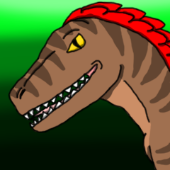 Common Name: Gojirasaurus Species Name: Gojirasaurus Dominious Time: Late Triassic Diet: Carnivore Temperment: Extremely Aggressive Wild: Surprisingly larger in comparison to how large the fossilized skeletons I had seen were, Gojirasaurus Dominious is larger than Allosaurus but slightly smaller than the Rex. Despite that size factor, Gojirasaurus Dominious had managed to become one of the apex predators of the wasteland for a few good reasons. Though it maybe true that they are known to go after various different creatures. But their overall hatred is directed towards the corrupted creatures, as well as some of the stray robotic units that stray too far from the sanctuary. Gojirasaurus Dominious seems to have utilized both it's jaws, and strong powerful tail in terms of the brawling category. While it also possesses dorsal spines that it must've developed as a unique adaptation which allow it to not only absorb the energy of the element they tend to consume, but to also unleash it as either a powerful elemental breath of blue fire, or when it is completely surrounded, releases a pulse of energy to knock most surrounding foes back which allow for an easy escape for it. And to top it all off, it's just as fast as Allosaurus, though it's slower than Carnotaurus in comparison. Domesticated: At first it wasn't known if it even is possible to tame a Gojirasaurus Dominious as it is immune to various tranquilizing substances, that was until I saw a few clever survivors manage to tame it by just dropping some element around it as an offering to it. As soon at it's tamed it, it had proven to be quite a very vital creature. I'd imagine that it would make dealing with hordes of corrupted creatures a bit easier due to it's formidable combat prowess. I fell like they would at least keep a stash of element on the creature at all times if they want it to be able to use it's remarkable abilities in combat as well. And who knows, maybe a few tamed Gojirasaurus Dominious could possibly stand a chance against the some of the Titans themselves.
 -

killer of eels and jellyfish Helicoprion - Storm of the Seas
Amanit posted a suggestion in Creature submission archive
Authors Amanit and MUSH1 Hello survivors, I present to you Helicoprion. Jellyfish and eels have always irritated me when traveling underwater. Their electric shocks are just terrible. That is why I want to offer you a helicoprion, which will become a nightmare for electric creatures and, in combination, their king. I also want to offer a new craft, but first things first. Basic information: Common Name: Helicoprion Species: Helicoprion bessonowi Time: Permian Diet: Carnivore Temperament: Aggressive Wild Helicoprion from afar can be confused with megalodon. However, if you swim closer, which you should not do, you will inapplicably notice a huge disk of teeth on the lower jaw. In this case, you need to quickly carry your legs! These terrible predators are able to open any armor like tin cans. Especially dangerous are males who care for females. It is also important to remember about the ability of males to accumulate electricity in spikes, which begin to glow with the accumulation of charge. With this ability, they can perform electric shocks that incapacitate opponents. Domesticated To subdue this sea thunderer, the survivors will have to work hard and risk their lives more than once. First you need to charm the female by defeating several angry males in her presence. Females are weaker and do not have the power of electricity, therefore they are tamed in order to subsequently subdue the male. However, if you overcome all difficulties, you will have an incredible fighting companion. With his power of electricity and a disk of teeth, you can crush any opponents! Saddle: The saddle does not have special properties (except for the new craft, but more on that later), but it will cost quite a lot and be unlocked at high levels. Drops: Raw Fish Raw Prime Fish Fragment of a Dental Spiral A fragment of a dental spiral will be a guaranteed trophy from a helicoprion carcass. It will be used in the crafting of acne and jellyfish repellant. After drinking this decoction, you begin to exude helicoprion pheromones, so jellyfish and eels become shy and run away from you. The effect lasts 15 minutes. Passive Abilities: • Thanks to the dental spiral, the helicoprion is able to break the armor of survivors at twice the speed. This ability also allows him to ignore 50% of the saddle armor of tamed creatures, so be careful with him! • Helicoprions prey on other electrical creatures, so electrophoruses and cnidarians are terrified of them (if jellyfish and fish can be afraid at all), since their electric shocks do not cause any harm to helicoprions. Active abilities: • - a bite blow that quickly breaks through the armor of survivors and ignores 50% of the armor of the saddles of tamed creatures. The base damage from the bite of a male is 70 HP. The base damage from the bite of a female is 45 HP. With a bite, the helicoprion dismantles corpses, receiving such resources as: Hide Raw meat Raw prime meat Keratin Chitin Raw fish Raw Prime Fish Organic polymer Pelt - electric shock. Only males have them. The strength and range of the strike depend on how charged the spikes of the helicoprion are. From 0% to 100%, the energy scale fills in 50 seconds, that is, 2% per second. The higher the charge level, the greater the damage, range and stun time of the enemy. The maximum stun time is 10 seconds. Shock Damage - X3 bite damage at max charge, so base damage will be 210 HP. If the Helicoprion sticks its nose out of the water, the impact will be weaker (2X damage) and the electric wave will be shorter, but it will spread through the targets like a chain, creating an electrical circuit. If a Helicoprion with a fully charged energy bar strikes electricity vertically upwards, there is a small chance that a thunderstorm will start. There are ways to speed up the filling of the energy scale: • One bio toxin fed to Helicoprion gives it 4% energy bar filling. • The energy bar fills up when the Helicoprion is shocked by Electrophoruses and Cnidarians, however, since they run away when the Helicoprion approaches, they must first be chased and “rubbed” against them, causing a discharge. • If a saddle is put on a helicoprion, then out of 200 bio toxins in its inventory it will be possible to make a special elixir, which speeds up the recharge of the energy scale by half for 5 minutes. That is, from 0% to 100% the scale will fill in 25 seconds. Does not affect other energy sources. •[C] - release pheramones. This ability works only for the female and is needed to tame the male. When the pheramones are released, all nearby males begin to follow your female and are neutral towards you. Taming: Helicoprion females are weaker than males and do not have electrical abilities. Their dental spirals are smaller, and therefore bites are weaker. However, they are also afraid of electrophoruses and cnidarians. They have a neutral behavior. Short version of taming: You can tame a female by defeating a male in a duel and taking fragments of his spiral disk. After that, with the help of the female, you arrange a "tournament among males" in which the strongest will win and you can brand the winner. Full version of taming: If you want to get a male, you first have to tame a female. To do this, you need to prepare iron armor and a shield (several sets are better!). Also, items that restore HP will not be superfluous. Then you find a female who is courted by a male (females always spawn with males, only males can spawn separately). In order for the male to perceive you as a rival, you need to take a decoction of a fragment of a dental coil to exude pheromones. In this case, the male will start a duel with you, which will be watched by his female. A male that enters duel mode will deal half damage as usual and will not use electric shock. You need to block his attacks with shield and armor, the higher the level of the male (the level of the male corresponds to the level of the female), the more hits he can make before his spiral disk completely becomes unusable. During the duel, the male will break off his teeth, three of which will fall out in the process, and when he is left without teeth (10-25 blows), he will lose the battle and swim away. If you survive the battle, then you will need to pick up the fallen teeth and make a "necklace of helicoprion teeth", the crafting of which will open in the early levels of the game. After you give this necklace to the female, and she becomes yours. It is important to remember that the female will accept the necklace only if you defeat the male. Once you have tamed a female, you have the option to tame a male. When you find a suitable candidate, you release pheromones and he begins to follow your female. Together you find another male helicoprion and release pheromones again. The males start a duel and the one who first lowers the opponent's HP below 30% wins. The loser swims away and the winner returns to the female. Taming progress is filled at the winner after the end of the battle. The higher the level of the male, the more battles he needs to tame, the level of his rivals also plays a role. The difficulty is to find enough helicoprions, and they will not be very common. I hope you are not confused. Breeding: There is nothing unusual in breeding helicoprions. Approximate base specs: Health: 2200 Stamina: 750 Food: 3000 Weight: 800 Additional Information: Helicoprion can carry: Tusoteuthis Can damage: Thatch Wooden Stone Possible uses of helicoprion: • Excellent vehicle. Helicoprions are fast and strong, they are also not touched by cnidarians and electrophoruses, so you can comfortably travel on them across the ocean expanses. • Battle comrade. Thanks to the ability of helicoprions to bite through armor and electric shock over the area, they are able to compete with even the largest inhabitants of the depths of the island. • Resource collector. It will be convenient to get fish and other seafood on the Helicoprion. • Anti-aircraft gun against flyers. The electric wave of the Helicoprion does not work as well on land as in water, but it is still capable of shooting down unwary fliers flying close to the water. It seems to me that the use of most creatures in the Ark is limited only by the imagination of the survivors, so you can always experiment). Thank you all for your attention! You can find out about the real helicoprion here: https://en.wikipedia.org/wiki/Helicoprion -
Common Name : Hatzegopteryx Name : Hatzegopteryx Thaambema Diet : Carnivore Temperament : Aggressive Wild : Hatzegopteryx has claimed the tittle as Ark's "Titan of the sky" , it being the size of a Giganotosaurus . They live solitary lives and are very territorial , attacking any creature it sees . Tamed : If you manage to tame one of these titans you're in luck , because you just befriended a "flying tank" . That can cause great damage and pick up creatures as large as an Amargosaurus . Note , if it senses that is in danger it will retaliate . If you manage to make a saddle for it , you managed to turn a flying tank into a bomber . Tame : Feed it tamed creatures Ridable : Without a saddle Saddle : unlocked at level 95 (allows you to drop bombs bellow you)
-
Tarbosaurus: The Hunter of the Wasteland
LordSwampy682 posted a suggestion in Creature submission archive
General information: Tarbosaurus was a genus of tyrannosaurine dinosaur from Asia, specifically Mongolia and China. Living 70 million years ago, it was around 33ft long, 9.8ft tall at the hips, and weighed 4.5 to 5 metric tons. It was the top predator of its time, feeding on large hadrosaurs and sauropods. Ark information: Common Name: Tarbosaurus Species: Tarbosaurus vastatio (vastatio means “waste” in Latin so it’s name translates to “alarming lizard of the waste”) Time: Late Cretaceous Diet: Carnivore Temperament: Aggressive, but somewhat lazy Wild: From a distance, one might mistake this predator for its larger cousin, the T.Rex. But on closer inspection (or only as close as you want to be) it’s clear that Tarbosaurus vastatio is a very different theropod. While still large, it’s not as big or stocky like it’s relative. Its slimmer build allows it to travel through these wastelands surprisingly fast for an animal of its size, although it does get exhausted very quickly. I frequently see packs of them stopping and napping after a hunt or after they travel long distances. Tarbosaurus have a very affective hunting strategy. Once the pack locks on a target, they will mob it and deliver powerful bites to they prey’s sides. The goal is to cripple the animal so that it can’t get away or put up much of a struggle. After the target is brought down, the pack will gorge themselves until they can’t stomach another bite. After a good meal Tarbosaurus become very sluggish and will straight up ignore anything that comes near them while they lounge around. But once they’re hungry again, I’d definitely stay away from them. Domesticated: Its lazy nature is actually the reason why survivors have come to tame these predators. Once a Tarbosaur lays down to take a nap, carefully throw any kind of concoction into its mouth to forcefully wake it up. Waking it up before its nap is over will bring it closer to completion exhaustion. By prolonging it’s much needed sleep long enough, the mighty theropod will eventually pass out. Surprisingly, tamed Tarbosaurus don’t seem to have the need to take naps unlike their wild counterparts. You can however give them the same items you used to keep them awake during the taming process to give them a boost of energy. Don’t overstimulate them though cause they might pass out if given too much. A tamed Tarbosaurus is an amazing animal to have at your side. These powerful predators are perfectly suited for fighting animals far larger than they are. It seems that the larger the opponent they face, the stronger they become. So it’s definitely better to use against the larger creatures that have been affected by the Element corruption than the smaller ones. Either way it is still a great beast to have fighting for you. Its crippling bite is probably its best attribute. Being able to immobilize an enemy for either an easy kill or a quick escape make’s Tarbosaurus vital in these extremely dangerous wastelands. Tabrosaurus would be a mid to late game carnivore mount similar to that of a Rex or Spino. Having a good amount of health, damage, and weight while also having high movement speed for a tame of its size. However, its high movement speed comes at a cost of having low stamina. Players would tame them by waiting for these dinosaurs to fall asleep and feeding them Energy Brews. After keeping it awake long enough eventually it will completely pass out and which point it can be fed Exceptional Kibble. While possessing a normal attack like other tamed of its size, Tarbosaurus has a vital ability that makes its stand out from others. A crippling bite. This crippling bite is an attack that does less damage than it’s regular attack, but stuns and immobilizes the target for a short time. This stun affect last for only 10 seconds and the crippling bite has a 20 second cooldown before it can be used again. This attack would not affect bosses or titans. Tamed Tarbosaurs can be force feed Energy Brews to give them a buff which decreases their stamina drain and increases their movement speed at the cost of raising their torpor dramatically. Use this boost sparingly, otherwise they will pass out. Its damage output is based on drag weight. The higher the drag weight of a target, the more damage a Tarbosaur will inflict on it. Images are not mine -
-
 Estemmeno is back! And this time ready for Extinction! If you were around (probably not...) during the Center vote, you may have seen our take on Estemmenosuchus, my favourite synapsid, so we're bringing him back and this time themed to be 100% fit for survival in the corrupted world of Extinction! Now onto the Dossier Common name: Estemmeno Species name: Estemmenosuchus Ultimadentaris Time: Mid Permian Diet: Carnivore Temperament: Aggressive Wild I am entirely convinced that Estemmenosuchus Ultimadentaris has no fears, they will fight anything that imposes a threat against them to the very end. I can't stress enough just how dangerous an encounter with Estemmenosuchus Ultimadentaris is, they aren't like any other Estemmenosuchus specimen, they are far different, they're aggressive, strictly carnivorous, and lay eggs, almost as if most of their genetics have been modified heavily. Estemmenosuchus Ultimadentaris is an remarkably terrifying predator and even the corrupted creatures fear going near to it's presence, which I partly understand, I don't know how to describe it but Estemmenosuchus seems to hurt corrupted creatures by far more than it can to regular creatures, maybe it is their seemingly natural taste for the corrupted nodules that can at times be found, I've seen survivors guiding the corrupted towards Estemmenosuchus and just see as they begin to swarm the corrupted slowly, did I mention they hunt in packs? Domesticated I don't know of anyone who has been brave enough (and/or dumb enough) to try and attempt taming an Estemmenosuchus Ultimadentaris specimen, in fact, I don't think anyone has tamed one as of yet, however, I know of many survivors who show an interest in taming Estemmenosuchus, which checks out, their amazing hunting capabilities as well as their increased speed when under pressure can make a formidable tame, especially against the twisted results of what Element has done to other creatures. Perhaps a way to tame them is by aiding them in a fight that they almost die to, slowly earning their trust, narcotics definetly seem to not work, and hand-feeding them would be feeding them your hand, I also highly doubt they'll let you 10 feet near their young or eggs, but then again, this continues to be nothing other than a theory. And that was the dossier! Of course, we had to change it for it to stand out more, now onto the abilities of an Estemmenosuchus and why you should tame it - Increased Damage to all corrupted creatures; This means that if you're ever in some trouble with creatures that are even slightly corrupted, Estemmenosuchus will deal increased damage and will take less damage against Corrupted creatures, this also includes to creatures like Velanosaurus and Managarmr. - Pack mindset; As stated earlier, Estemmenosuchus spawns and will be in packs, these packs can be of 6-8 members, you will likely see the leader far away from the pack, just remember, if you see an Estemmenosuchus, their buddies are around too, you're always being watched. - Taming method; Trust gain, instead of stealing their eggs, killing their pack, knocking out, or passive taming, you'll have to lower Estemmenosuchus' health, and afterwards guide it towards a Corrupted Creature, to help Estemmenosuchus killing them, afterwards a trust meter will begin to go up, after the first creature killed, Estemmenosuchus will not chase you, after the second creature killed, Estemmenosuchus will follow you slowly, after the third creature killed, Estemmenosuchus will follow you completely, after the fourth creature killed, you may ride Estemmenosuchus for additional protection, finally, the fifth creature marks the completion of the trust meter, and Estemmenosuchus will be yours, note that this excludes the "pseudo-corrupted creatures" like managarmr, velanosaurus, gasbags, gachas, etc. - Crazed Ego; if Estemmenosuchus begins getting damaged a lot by a corrupted creature, it's ego will be hurt, and it will become enraged and it's attacks would work similarly to the Tek Claws from Gen 1, it will slowly begin dealing more and more damage to the creature, this buff will apply to the pack as well. The Pros of tamed Estemmenosuchus - Corrupted and Boss Killing; Due to the buff that Estemmenosuchus recieves against Corrupted Creatures, it would be quite optimal to use these boys to go on runs for Corrupted Nodules, killing Titans with additional backup, and even Orbital Supply Drops, just be sure to have them well-leveled, otherwise it won't end up as good. - Psuedo-Tank; Estemmenosuchus will be beefy and will hit like a truck, it may tank a lot of hits and considering the Crazed Ego buff ontop of the Pack Buff, it makes it a very good tame for people who want to go out on crazy runs, or want to absolutely demolish a Titan with these dudes. - Kind of Trusty Companion; No matter the circumstance, be it torpor, be it low health, Estemmenosuchus will fight for you to defend you if you're dying, no matter what, it is willing to give it's life for yours, and it will ensure to do it if it has to. - No fears; it takes multiple roars from Yutyrannus to scare Estemmenosuchus away. - Versatility; Estemmenosuchus is incredibly versatile, wanna run through the wastelands? This guy will cross you through without hesitation, Wanna go to the Desert Dome? He's got you covered too, he'll keep you alive and will beat anything that DARES attack you, wanna go to the Snow Dome? He's got you covered, ain't NO managarmr attacking you, ain't NO yuty scaring bro, wanna go to the Crater Forest and build a base? You and your Estemmenosuchus will build a little house together. - EXTREMELY useful in PVE/PVP; Estemmenosuchus is WORTH taming by all means, it's combined abilities make it an extremely worth-it tame to obtain, it'd deal a lot of damage to creatures which are used a lot which could possibly be a game changer whilst in combat. The Cons of tamed Estemmenosuchus - Fatso; If you overwork your Estemmenosuchus by not properly feeding it, or making it overuse it's stamina, it will knock you off and just sit there until you properly feed it or it's stamina regenerates, note this doesn't apply if the survivor is about to die. - Tedious taming; Taming Estemmenosuchus will be EXTREMELY grinded, they can only spawn on selective zones of the wasteland and rarely, obviously not rarer than like, idk, a Corrupted max level Giga, but definetly rarely, it will be a very RNG-Based taming and spawn, as well as a max level Estemmenosuchus isn't always guaranteed - Reduced utility outside of extinction; Estemmenosuchus sounds OP in paper, but in a map outside of extinction it is practically just another high-damage dealing carnivore, this doesn't mean they'd be weak, quite the contrary actually, but Estemmenosuchus excells in Extinction and other maps that include corrupted creatures or the after-mentioned "pseudo-corrupted" creatures - Taming rates don't affect procedure; No matter your taming rates, be it times 100 taming speed it will ALWAYS take 5 victorious battles against corrupted creatures. - Overall PVE/Solo/Small Tribe challenge; Since taming Estemmenosuchus would be such a tedious and long process, a big tribe would be prefferable to find the corrupted dinos and keeping Estemmenosuchus in one place, not to mention guiding the preffered specimen away from the pack. - Pack requierments; Similarly to gachas, Estemmenosuchus will get sad if it doesn't have a pack. Saddle Estemmenosuchus' Saddle unlocks at Level 73, beggining with Late Game ARK; It will have the following requierments: 120 Metal Ingots/Scrapped Metal Ingots 180 Cementing paste 400 Hide 80 polymer/organic polymer/corrupted nodules 20 crystalized blue sap 15 crystalized red sap 60 sulfur The reasoning behind this is for Estemmenosuchus to be a tame that is worth it and at the same time not something you'll see everyone riding around with, making it expensive will make only the true survivors get the resources for this creatures saddle, the way the saddle works is that it'll give Estemmenosuchus a sort of helmet, which will exagerately extend protection from it's horns, therefore making it a sort of crest-like shield like that of Triceratops, the armor will also give the survivor protection from being flanked by enemy attackers, basically, it'd be worth it. Pack While Estemmenosuchus seems grindy, it is absolutely worth it to tame, and a pack of these? Is even MORE worth it. It is self explenatory, tame a pack of these, you get a buff, and if the leader of the pack roars, al the pack gets a buff. And that'd be IT (for now, at least) for ESTEMMENOSUCHUS! Art is coming VERY soon, so stay tuned, and as always ESTEMMENOFTW
 -
Many ideas were had when considering Brontoscorpio and in order not to eliminate possibilities, some of the ideas that were had will be put in the form of a "suggestion". Since we are Xbox players we write the actions of Brontoscorpio in terms of the xbox controller Dossier: Common name: Brontoscorpio Species: Brontoscorpio Anglicus Period: Silurian Diet: Carnivore Temperament: Aggressive Wild. Our search for Brontoscorpio was a total failure. Straight out of a movie about giant insects, a Brontoscorpio ambushed us on the shores of a lake, it was so big that not even a Rex could step on it. Although we were prepared with a large mount, it was useless against this huge scorpion, with its large pincers it kept it at bay and not to mention the huge sting at the tip of its tail. Although we made it out alive, it cost us the life of a powerful mount and it is not for less, it delivered fatal blows with those pincers but what ended the life of our mount was the poison from its sting. Despite everything we shot at it, only the poisonous grenades seemed to have an effect on Brontoscorpio. Domesticated. If you are lucky enough to tame a Brontoscorpio, you will have in your possession one of the all-purpose creatures you can find. Some tribes use Brontoscorpio for the attack or defense of bases, but where they use it the most is in the manufacture of objects and transport of things. I didn't believe it until I saw it in person, how one of these scorpions was able to bend a metal plate with ease or convert ingots to small plates using its pincers. Some even use it to transport merchandise, equipping Brontoscorpio with a small platform, transporting shops as if it were a mobile market. I even got to see a small food store on his back. Map location: Mainly in the sulfur fields where it will roam hunting its next prey, less frequently Brontoscorpio can be seen stalking its prey in the mud basins and in the rivers of the sunken forest. Combat skills: 1- Main attack (Rt and Lt): Brontoscorpio will be able to use its large pincers to hit its prey, leaving the smaller ones disoriented. 2- Grasp (keeping Rt and Lt pressed): he can hold or imprison his victims with his pincers and once held (using the main attack), Brontoscorpio will close his pincers until he ends the life of his victim (the damage increases per second or nullifies the effect of armor). 3- Secondary attack (Rs): Brontoscorpio can use his needle to inject a poison, which will reduce 5% of the dino's total life for 5 or 10 seconds. 4- Critical Hit (Rt+Lt+Rs): Brontoscorpio can perform an animation where it holds its victims with both pincers and injects a large amount of poison, this hit can be an instant death for small prey and it will be a powerful hit for small prey. bigger. (You will have a considerable cooldown, where you will not be able to use the second attack and the critical strike). The following button combinations are suggested: 1- Rt+Rs: a combo attack is executed (right pincer + left pincer + stinger), it will have a 3% increase in damage + poison effect. (Duration 5 seconds). 2- Lt+Rs: a tail movement is executed, where Brontoscorpio will turn on its axis and hit its opponents with its tail (Similar to Reaper or Carcha). Passive Skills: 1- Mobile Blacksmith and Manufacturer: Brontoscorpio without a frame can be used as a blacksmith, where it will use its large and powerful pincers to manipulate the hardest materials and with a frame it can be used as a manufacturer, where it will use the smaller pincers to carry out more delicate work . 2- Weight reduction: would have a 50% weight reduction. 3- Base Mode (Brontoscorpio's radial menu will activate the base mode): Brontoscorpio will extend its limbs and let all its weight be supported by the surface where the base mode is activated (it will remain motionless). While in base mode, Brontoscorpio will ignore the weight limit and you can fill it with all the resources you need to craft items (Similar to Exomek). 4- Camouflage: while the base mode is active, Brontoscorpio cannot be detected by Parasaur. Due to extreme exposure to the elements, Brontoscorpio has a natural camouflage against corrupted dinos (they won't be able to detect it unless you attack them). 5- Damage Reduction: By having an exoskeleton, Brontoscorpio has a natural armor (50% damage reduction). Suggestion: Brontoscopius will have a weak point (Thorax) where more damage can be dealt. 6- All Terrain: Brontoscorpio, being a type of marine scorpion whose breathing is through gas exchange, can be used in the depths of the ocean and climb some surfaces with a certain inclination (less than 65 degrees). Suggestion: Underwater Brontoscorpio will have the option to climb (Similar to Rock Drake). 7- Pick up structures (LB+) : Brontoscorpio will be able to pick up structures and store them in his inventory (Similar to Exomek). You will not be able to pick up tek structures. Size: Thanks to the abundant energy produced by the element and the constant encounter with large predators, Brontoscorpio increased its size to be able to rival its competitors. It would be the length of a rex, from sting to head, and 4 or 5 foundations thick. Suggestion: 1- Brontoscorpio could be similar in size to Megachelon 2- Brontoscorpio could be similar in size to Brontosaurus or Paracer. The mount could be learned at level 70 and the platform at level 85. Suggestion: Brontoscorpio's platform can be a new tek item, which can provide power to structures built on the platform (Item will need to be managed). His engram can be acquired after defeating the titan of the forest or the desert. Note: The platform does not have the maker ability. Taming method: Since Brontoscorpio's exoskeleton is tough enough to nullify the effect of tranquilizer arrows and darts (also Shock's). To tame a Brontoscorpio you will have to throw poison grenades or use narcotic traps to put a Brontoscorpio to sleep, and then feed it its favorite food. Farming: Thanks to Brontoscorpio's large and strong pincers, it is capable of collecting various types of minerals. Main Idea: One of the main ideas is that Brontoscorpio is a creature with which you can navigate the Extinction map very comfortably and you can use it in different situations.
-
 Common name: Alectrosaurus Species: Alectrosaurus corafulgur Time: Late Cretaceous Diet: Carnivore Temperament: Aggressive Wild: The effects that Element has on living organisms is both fascinating, and horrific. And the creatures that are able overcome the corruption, moreso. Take Alectrosaurus corafulgur for example. Its heart has nearly been taken over by Element! I have concluded that this unique adaptation has some ups and downs. On one hand, this so-called "Element enhancement" has greatly improved the Alectrosaurus’ agility, far beyond anything I've ever seen. However, with its heart practically exposed, it leaves Alectrosaurus with one big and obvious weak spot. Excessive damage to what is essentially a reactor core in its chest may provide… “explosive” results. If ever confronted by one, be sure to use this to your advantage! Domesticated: The Survivors I’ve met have been able to do some of the most extraordinary things with a domesticated Alectrosaurus. When asleep, an Alectrosaurus’ “heartbeat” produces a sort of pulse energy. Some have been able to harness this energy in a way to power their electronic systems not unlike a Tek Generator, no wires needed! Others have discovered that providing an Alectrosaurus with pure Element can enhance its physical abilities even further!
 -
🦁Feral Sovereign: Presenting the Panthera Spelaea🦁 ⛰️The Panthera Spelaea is an extinct species of carnivorous mammal belonging to the family Felidae, which lived in what is now Spain and the British Isles in the west up to Alaska⛰️ 🙀."Witness the Feral Sovereign, the Panthera Spelaea. With its Roar of Dominion, it commands the battlefield, weakening foes' resolve. The Bite of Energy Drain saps their vitality, a true conqueror's strike. As the Cave Shadow, it prowls the depths with unmatched prowess. Clad in its Guardian Pelt, it defies the elements, a protector in every sense. A true Hunter of Horizons, its vision spans day and night, tracking all with precision. Bow before the Feral Sovereign, the embodiment of primal supremacy."🙀 👉READ THIS BEFORE YOU START👈 It gives us a lot to present this project in which we have been working to try to give the best proposal. First of all, I would like to clarify that the reason why we chose a big cat is because we see that Ark only exists today, the saber-toothed cat, the Shadowmane is a fictional animal, and the Thylacoleo is a marsupial, so we treat to obtain the best attributes of the Panthera Spelaea to have a strong suggestion and a chance to expand the niche it would work in. Being more a type of predator that can attack its prey in a fast and forceful way, rather than opting for a long and repetitive fight in the aspect that it is not a battle for "mashing the buttons" 👀Size👀 respecting the large size it had in ancient times, we take into account that Panthera Spelaea is larger than a thylacoleo but smaller than a shadowmane, being a midpoint 💥Wild💥 Panthera Spelaea is a ferocious animal found in the northern part of the icy mountains, being more specific in the rocky areas where their dens are located where they rest. For the most part, being in herds made up of females and males, due to their thick fur, they are able to withstand the low temperatures that few are willing to endure. It is possible to see that the temperament of the Panthera Spelaea changes depending on the gender it has, with the females being the most aggressive, hunting small creatures in groups and the males having a temperamental attitude, being close to their den tending the young of the herd. During the night is when the Panthera Spelaea becomes more dangerous since in this case the whole herd together with the alpha male hunting large prey due to the leadership of the Alpha which seems to make the females more lethal than during the day. 💥Domesticated💥 The survivors of the ark have realized that it is impossible to subdue an adult Panthera Spelaea and teach it commands, it simply ignores anyone other than its alpha male and when the alpha is captured they go into a state of crisis and disperse. separating the herd and killing their young by starvation. Seeing that the only viable way to try to have this mount is to wait until nightfall so that the herd leaves its lair and thus can take its young. Panthera Spelaea young, due to their young age, it is easier to teach them correct training until they reach adulthood, resulting in a powerful, strong, agile and fast hunting animal that by itself shines a lot but when in a pack it becomes becomes one of the deadliest animals in these lands. 💪SKILLS💪 1. Mighty Roar: 🙀it is a powerful roar that allows him to remove the states in which he can be found by his enemies (poison, bleed, stun, etc). This ability must be used carefully as it takes a long time to activate again.🙀 2. Overpowering Bite: 🏃♂️Due to its powerful fangs, every time the Panthera Spelaea charges its bite and bites an animal or a person, the victim will suffer a drain that will cause them to lose energy.🏃♂️ 3. Cave Predator: ⛰️The Panthera spelaca has developed exceptional agility and strength in confined spaces, such as the caves on the map. She can move easily and quickly in tight terrain, making her a formidable threat in those environments.⛰️ ⛰️In addition, his visual acuity allows him to track prey and enemies in environments underground, following clues and tracks to locate their prey with ease.⛰️ 4.Lethal Dart: 💥The Panthera spelaea attacks with a fast and precise movement, dealing lethal damage. Activates tactical retreat which makes you 20% faster to escape before enemies can counterattack, leaving only a fleeting flash💥 💥if faced with a large animal, Panthera Spelaea will be able to jump and cling to its body causing this powerful bite💥 5.Nocturnal Guardian Fur: 🥶 Its fur is thick and with color variations. Making it harder to spot at night, while providing warmth for your rider and nearby companions..🥶 6.A good companion: 🦴 Keep your Panthera happy with food and petting, and it will purr, giving you and nearby animals a small experience buff.🦴 🦴It would work almost the same as that of the lystrosaurus🦴. 7.Improved vision: 👀Its excellent vision allows it to easily identify other predators compared to the human eye, during the day being able to detect carnivorous animals and improving its vision considerably during the night detecting both carnivores and herbivores, having a very broad perception of the animals around it.👀 Taming 🐈⬛To have a Panthera at your disposal without being attacked you have to look for a herd made up of males and females: the male specimens will be closer to the cubs taking care of them and having a temperamental attitude while the females will be around them being aggressive. You must be skillful enough to capture one of the cubs from the pack in your arms and escape from the parents as quickly as possible before they realize your presence, if they do so the cub may get scared and lose taming efficiency once in your hands raise it and bond by teaching it to hunt, keeping it clean, healthy and well fed, keep a close eye on them, they are known for short attention spans and arrogance..🐈⬛ 👉Basic statistics👈 Health: 850 Stamina: 450 Oxygen: 250 Food: 1750 Weight: 500 Melee damage: 100% Movement speed: 100% Torpor: 850 👾First mammal with Tek Mount👾 🤖Considering that this big cat is a killing machine, we suppose that after ascension you will be able to equip it with a tek mount capable of projecting a holographic shield to protect its front part. Adding also a pair of thrusters that allow him to make his jumps wider and maintain his top speed for much longer.🤖 Agradecimientos a AngelGamez,Neto,Boryini y Cetcat por ayudarme con las imagenes 😃 (En breve actualizaremos las imagenes, las de ahora de momento son bocetos todavia)
-